Top Floor Teachers: Book Companion

Join us on the Top Floor!

We're Joe and Quyen and we can't wait to share all things teaching with you. By signing up, you will be first in line when we share new ideas and resources. Can't wait to meet you!

    We respect your privacy. Unsubscribe at any time and we can still be friends.

    Showing posts with label Book Companion. Show all posts
    Showing posts with label Book Companion. Show all posts

    Using Picture Books for Narrative Writing


    We love to use picture books in our classroom. We are firm believers that you are never too old to learn a good lesson from a picture book. Roller Coaster by Marla Frazee is no exception. While the concept and text of the book may be simple for 5th graders (it is about a girl's first thrilling ride on a roller coaster), we are able to get a couple week's worth of writing instruction out of it!

    We have to admit, this idea was inspired from a training we attended about integrating visual arts into literacy instruction. One great way to get students talking about art is to have them study illustrations in picture books. Marla Frazee is an amazing illustrator, and the facial expressions and subtle nuances of her pictures make for great art pieces to look at closely. To begin this lesson, we don't even have the students read the text in the book. Instead, we choose one set of thrill seekers to follow page by page. For example, there is an elderly couple that is riding the roller coaster together. We have the students focus just on the facial expressions of this couple as the story progresses. Students then choose another duo to study from beginning to end on their own.

    After getting familiar with the different characters in the book, we then lead a class discussion on character traits. The students have a fun time thinking of traits for each set of characters, especially because looks can be deceiving with this set of riders! Several character pairs go through a character shift over the course of the book which also helps with understanding sequencing. We like to record this class discussion as an anchor chart for students to refer back to in future lessons.

    The next lesson we do focuses solely on dialogue. Students are encouraged to imagine the conversations the character pairs have with each other before, during, and after the ride. They use the illustrations, as well as the character traits listed in the previous lesson, to come up with realistic dialogue for their characters. Again we like to model with one duo, giving us the opportunity to explicitly teach grammar rules related to dialogue. Students then move on to independent work using a character set of their choice.

    Finally it is time to take what they have created thus far and turn it into a complete narrative writing piece. After modeling the components of a narrative that are expected at their grade level, students are given the opportunity to write their own stories from the perspectives of their chosen characters. As we all know, and as Marla Frazee makes perfectly clear with her wonderful illustrations, we all have different experiences on roller coasters, and the stories that come from this activity certainly reflect that.

    Of course, after all of their hard work, we do end up reading the text to the class. We then like to compare the story the author wrote to the ones they came up with to look for similarities and differences. This book also does a great job of showing how authors and illustrators use font size, color, and shape to help tell a story. We were amazed at how in-depth our conversations with our students became as a response to this book. Do you know of other picture books that would lend themselves well to this kind of activity? Let us know!

    If you want to use this book in your classroom, here is our affiliate link! By purchasing from this link, we earn a small commission.

    2

    Kindness Week Book Reflection


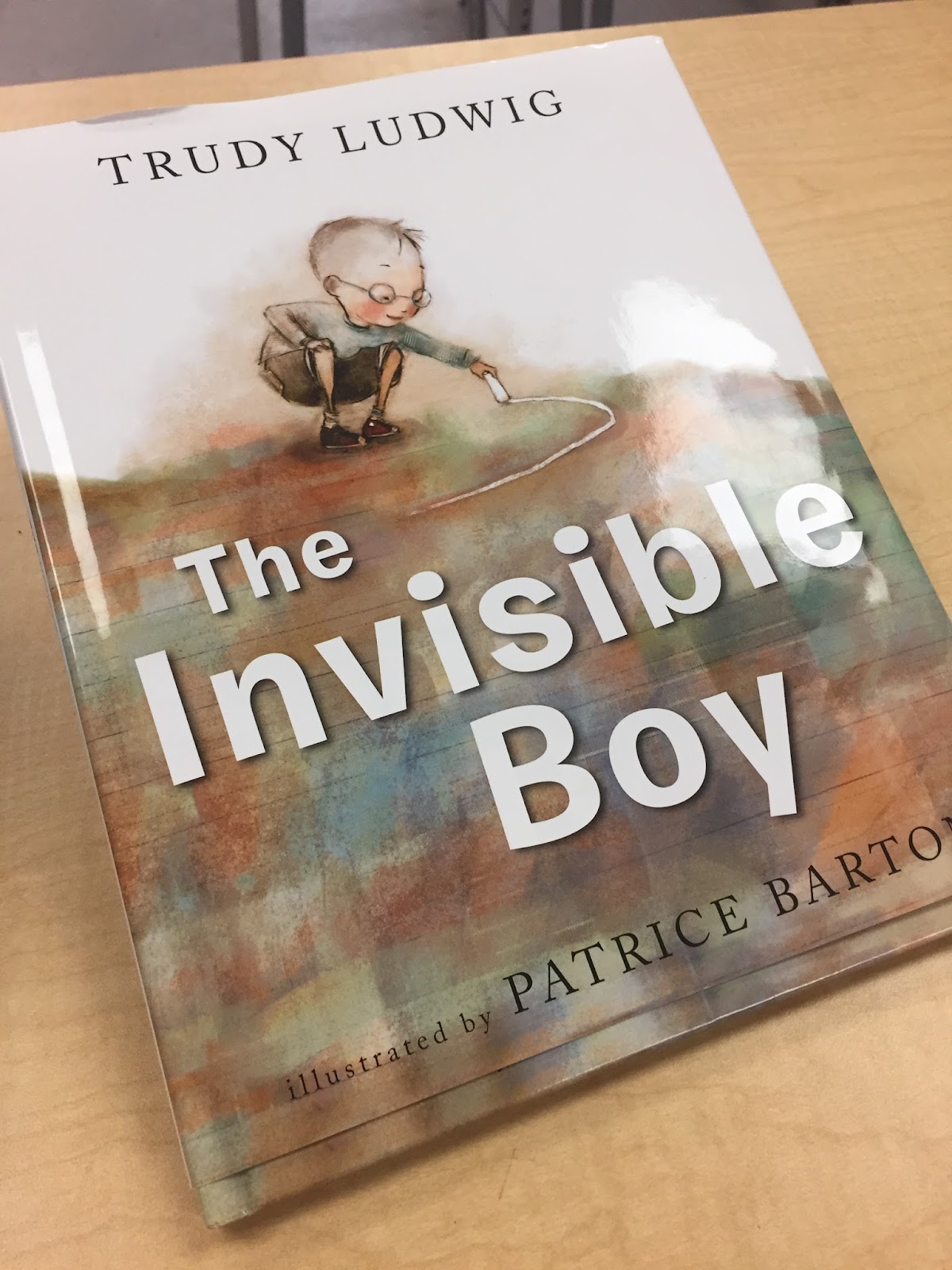
    Have you ever read The Invisible Boy by Trudy Ludwig? It is a heartwarming picture book about the power of kindness. Brian is a kid who feels invisible at school. Always being left out and looked over has taken its toll on the little guy. When a new kid moves to school and starts paying attention to Brian and his talents, Brian’s world becomes a bit more colorful. Reading a quick blurb online made us quickly realize this was a must-have read aloud for our classes.

    Our school is participating in a two-week Kindness Challenge, during which students are inspired to partake in various acts of kindness. On top of this, our school has had a particular focus on kindness throughout the year in hopes to create a positive school culture of mutual respect for one another. This book just seemed to lend itself so perfectly to our discussions of empathy and kindness, so we had to try it out and see how our kiddos responded to its message.

    We invited our 2nd Grade Buddies over to our classroom for the read aloud. The discussions we were able to have during and after the reading were awesome. So many of the students, 5th and 2nd graders alike, could relate to the feelings Brian had throughout the book. And it was so clear to the students that all it took was one person’s kindness to turn his world around.

    The Invisible Boy Reflection Activity -
 This lesson is a valuable follow-up activity after reading the book The Invisible Boy. Children studying empathy and kindness will be able to connect to the story while also having fun!

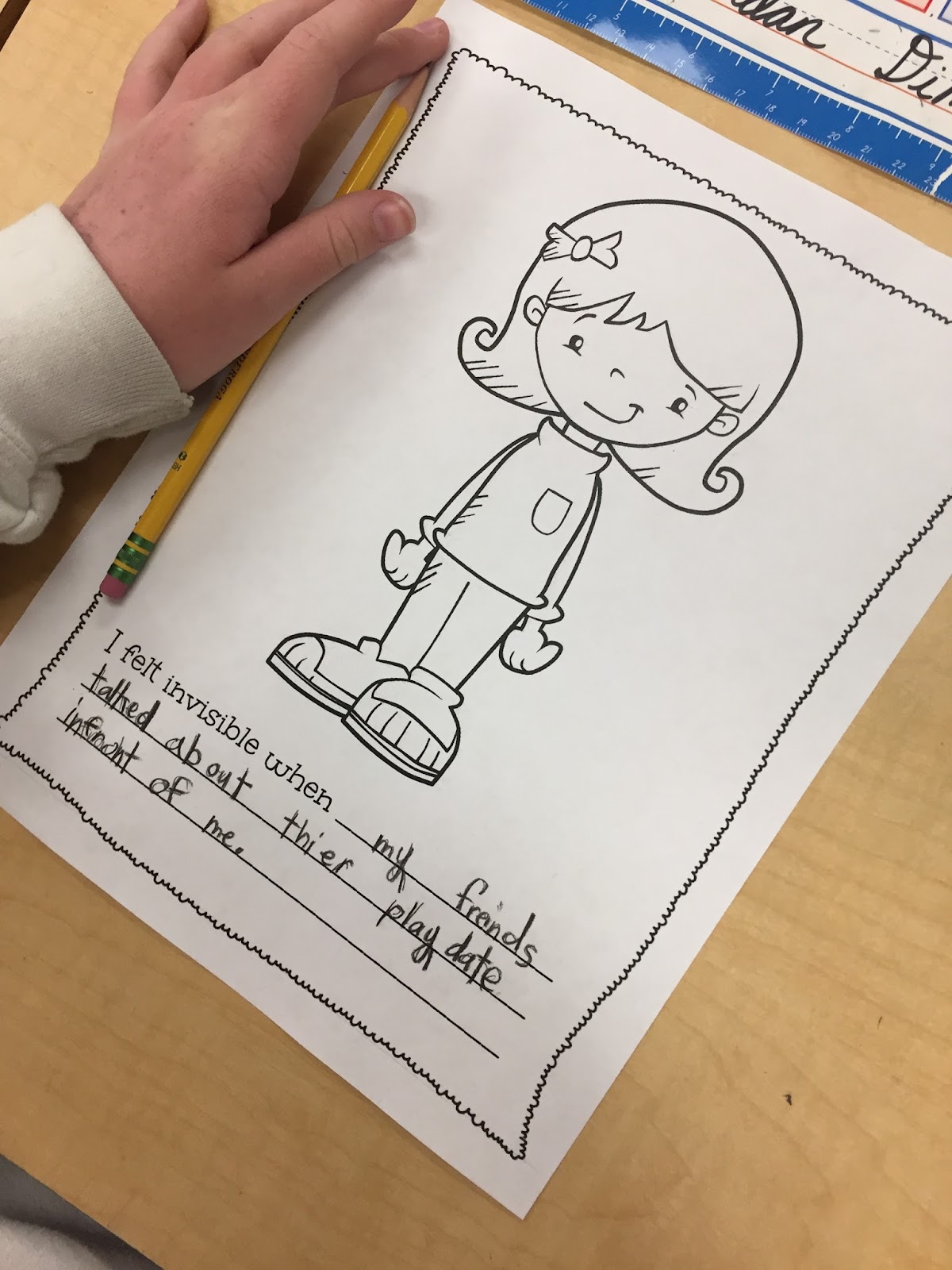
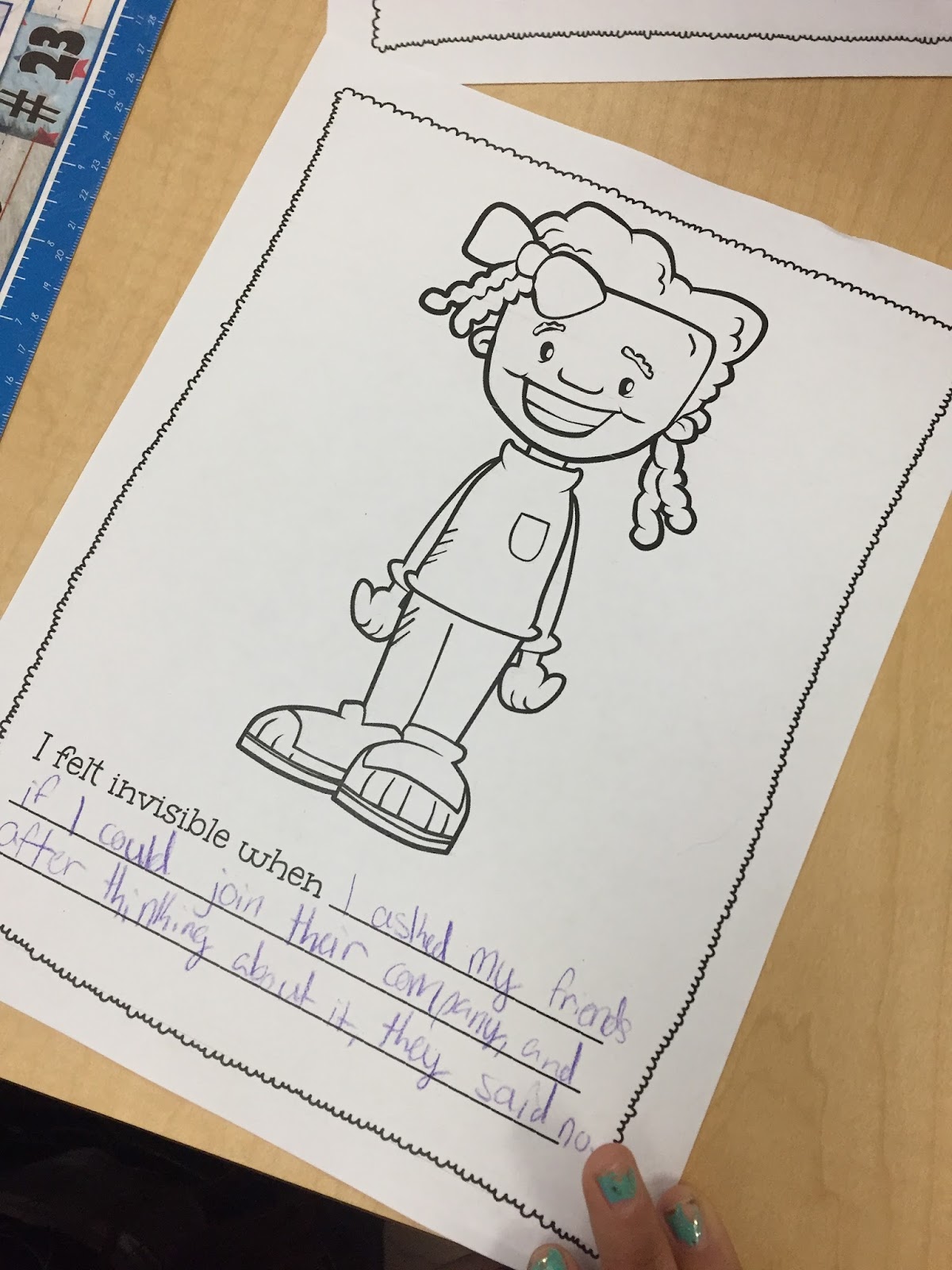
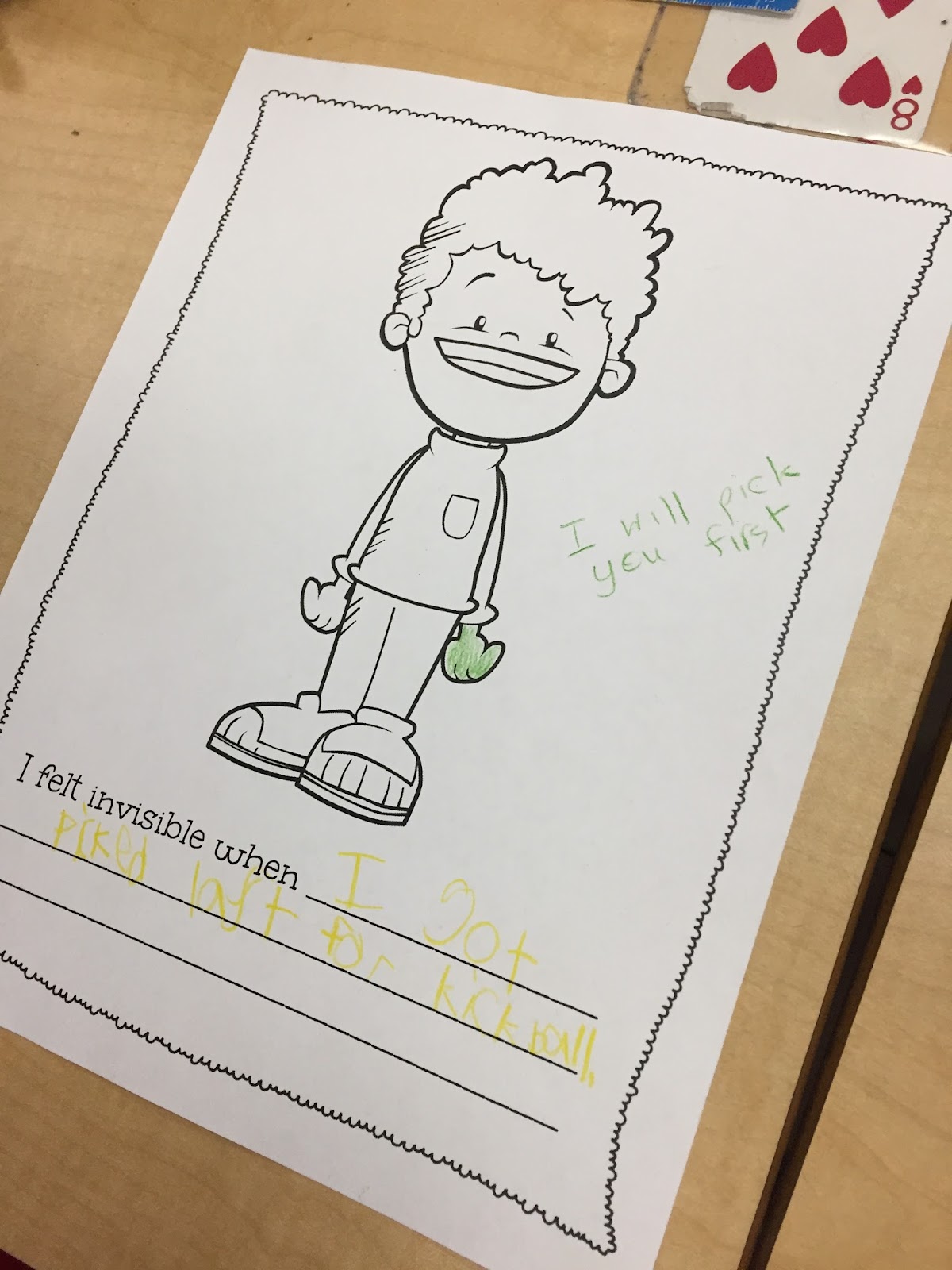
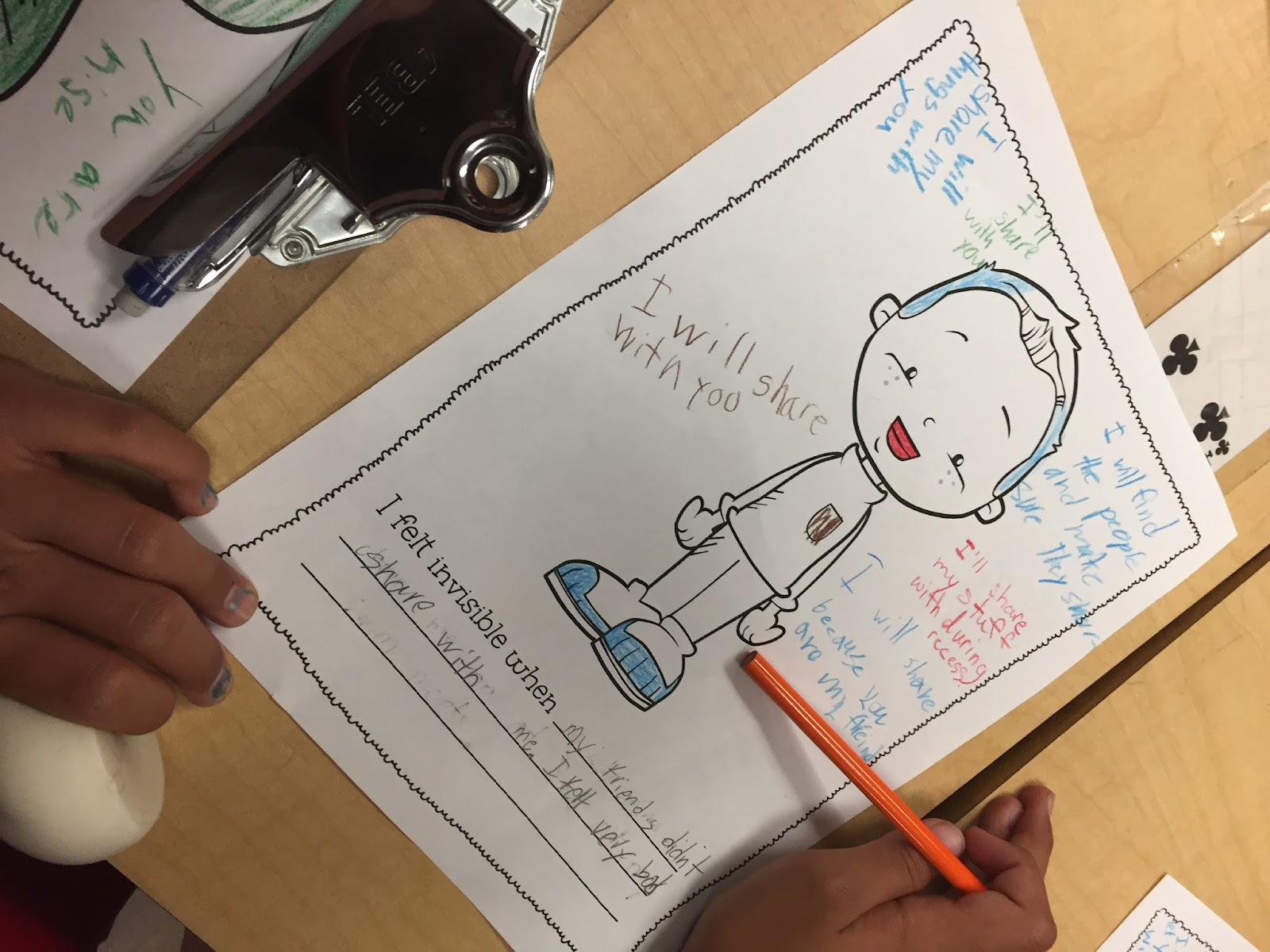
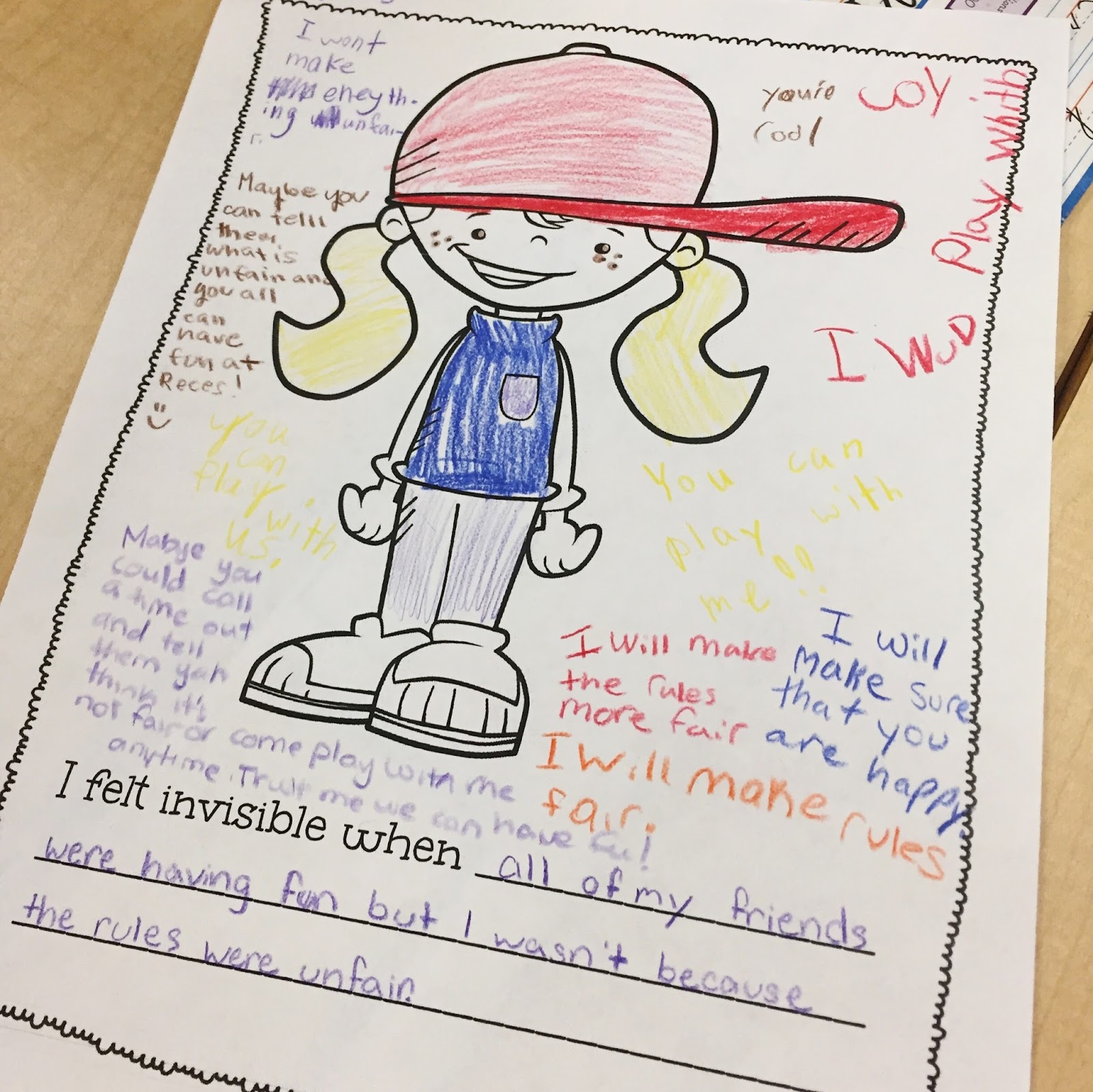
    We wanted to take this discussion a step further so that the students could really visualize how others’ kind words and actions can positively impact our lives. To do this, we gave each child a black and white image of a child and had them write down when they felt invisible themselves. Examples ranged from not being invited to a birthday party, to friends not waiting for them at recess, to parents giving more attention to a brother or sister. Not only was this a good reflection for the students to get in touch with their own feelings, but it gave us as teachers an insight into what is going on in our students’ worlds emotionally. But the truly powerful part of this activity is what came next.

    The Invisible Boy Reflection Activity -
 This lesson is a valuable follow-up activity after reading the book The Invisible Boy. Children studying empathy and kindness will be able to connect to the story while also having fun!    The Invisible Boy Reflection Activity -
 This lesson is a valuable follow-up activity after reading the book The Invisible Boy. Children studying empathy and kindness will be able to connect to the story while also having fun!

    Each child then took their paper and read it to someone else. In response, the other student would use their colored pencil to write a word of encouragement or a kind deed to help the student feel more visible. Then using the same colored pencil, they would color in a piece of their picture. Students walked around from peer to peer, gaining words of encouragement and quickly getting their pictures completely colored in. The final product was a colorful page full of kind words all directed to each individual student. What a great personal keepsake for the kids to look back on whenever they start to feel invisible in the future. We can’t wait to do this activity again next school year!

    IMG_5643.JPG  The Invisible Boy Reflection Activity -
 This lesson is a valuable follow-up activity after reading the book The Invisible Boy. Children studying empathy and kindness will be able to connect to the story while also having fun!  The Invisible Boy Reflection Activity -
 This lesson is a valuable follow-up activity after reading the book The Invisible Boy. Children studying empathy and kindness will be able to connect to the story while also having fun!

    If you’d like to try it out, here is a free sample of our Invisible Boy Worksheet. To download the entire pack with a variety of kids to meet the needs of the students in your class, visit our TPT store here or visit bit.ly/invisibleboyreflection.

    Let us know how else you have incorporated this book into your classroom. We would love to hear about it!
    The Invisible Boy Reflection Activity -
 This lesson is a valuable follow-up activity after reading the book The Invisible Boy. Children studying empathy and kindness will be able to connect to the story while also having fun!
    2

    Main Character iPad Template

    We are always looking for fun and meaningful extensions after our novel studies.  The idea to use an iPad came from the fact that we have seen the power of technology grow over the past few years.  When we both first started teaching, many students didn't have their own device but now it seems like every single student has at least one device in their house and if they don't, they sure know how to use one! This activity is a fun one that can be used with any novel.  The best part was not really giving detailed instructions because it allowed the students to be creative! We read My Brother Sam is Dead in class (which the students absolutely loved!) and asked them to think of this question: "If Tim had an iPad, what types of made up apps do you think he would have on there?" It's important to emphasize that most should be made up.  Of course, they can choose an app today if they can make connections to the book but we highly doubt a young boy during the Revolutionary War would be interested in Angry Birds! The pictures below show what one student came up with.  We were blown away with their creativity!


    Students cut and glue iPad down in notebook or piece of paper.
    On a separate piece of page, students redraw the apps and add a short description about the app.

    This template isn't on our TpT page but it is free here to you! If you are interested in using the book, My Brother Sam is Dead, please check out our Interactive Notebook Unit Study at our store.  Enjoy the template by clicking the link below and leave us some comments of how you used it in your classrooms! 


    1
    Back to Top